

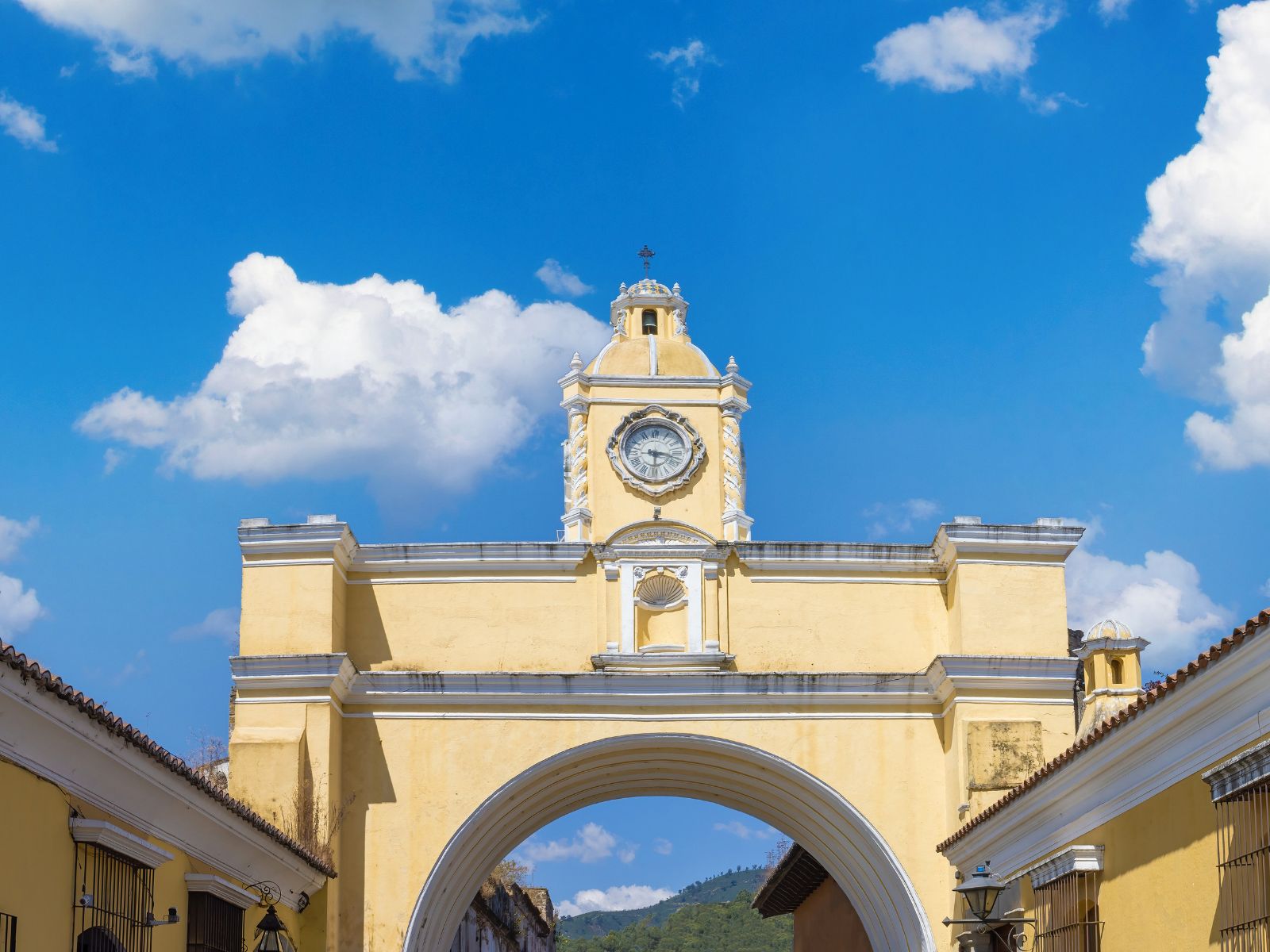
Most relocation guides about Antigua Guatemala drown the reader in brochure language: cobblestones, eternal spring, the volcano at sunset. None of that helps when you’re sitting at the airport with two suitcases and an actual decision to make. This guide skips the postcard material and walks through what relocating to Antigua actually looks like in 2026 — the buyer pool, the legal essentials, the neighborhood structure, the costs, and the things foreign buyers consistently wish they’d known earlier.
Century 21 Antigua Fine Homes has been brokering Antigua real estate since 2008, working with overseas buyers through the 2008 crash, the 2012 boom, the 2018 Fuego eruption, COVID, the post-COVID remote-worker wave, and the current market. What follows is distilled from nearly two decades of foreign-buyer transactions — current, honest, and stripped of the marketing language that most relocation guides lean on too heavily.
Who actually moves to Antigua (and what surprises them)
The buyers closing on Antigua property these days fall into a few clear groups: US and Canadian retirees in their late 50s to mid 70s, remote-working couples in their 40s who can put down roots anywhere with fiber internet, returning Guatemalan diaspora buying back into the country, and a smaller group of luxury buyers picking up a colonial casona as a part-time home.
What surprises almost all of them, after they’ve lived here a few months, is the same short list:
- The weather is not “tropical.” Antigua sits at 1,530 meters (5,020 ft) in the central highlands. Days run 70–78°F, nights drop to the mid-50s. You’ll wear a sweater in the evenings. You’ll never run air conditioning.
- You don’t need a car to live here. The Casco Histórico, the colonial core, is a 15-block grid. Most of our clients walk everywhere for the first six months, then buy a car only because they want to drive to the Pacific Coast on weekends.
- The expat community is real but doesn’t run the town. Antigua is a working Guatemalan city of about 46,000 residents, in a department of 330,000. You will live among Guatemalans, not in a gringo enclave. That’s the point.
- Healthcare in Guatemala City — 45 minutes away — is genuinely excellent. Hospital Herrera Llerandi and Hospital Centro Médico both rank among the top private hospitals in Central America. Routine care happens in Antigua. Specialist care happens in the capital. Insurance is widely available.
The buyers who struggle here usually struggle for predictable reasons: they expected a Caribbean beach, they don’t speak any Spanish and refuse to learn, or they bought sight-unseen on a property tour. Antigua rewards people who arrive curious. It punishes people who arrive impatient.
Can foreigners own property in Guatemala? Yes — and that matters more than you think
This is the single most common first question from US and Canadian buyers, usually framed as a worry. The answer is the cleanest “yes” in Latin America.
Guatemala allows foreigners to hold title (escritura pública) directly, in their own name, with no trust structure, no restricted zone, and no special permits. This is meaningfully better than Mexico’s coastal fideicomiso system, which many buyers assume must apply here too. It doesn’t. A foreigner can buy a house in Antigua the same way a Guatemalan citizen would.
The transaction itself runs through a Guatemalan notario, who is also an attorney. The typical sequence:
- Reservation / promesa de compraventa. Earnest money (usually 10%), a 30–60 day window to close.
- Due diligence. Your attorney pulls a title certificate from the Registro General de la Propiedad (RGP), confirms IUSI property tax is current, checks for liens or pending litigation, and verifies the survey.
- Closing. Escritura signed before the notario, balance paid, possession transfers.
- Registration. The notario submits to the RGP. Full registration takes 4–12 weeks, but you’re protected from the moment the escritura is signed.
Closing costs run about 3.5–4.5% of the deed price for the buyer — most of that is the 3% timbre fiscal (stamp tax), plus notary fees and small registration costs. There is no annual mortgage interest deduction game, no escrow industry, no title insurance product layered on top. It’s a more direct system than the US one once you understand it.
One detail that catches people off guard: in Guatemala, you can buy in your personal name or through a Guatemalan corporation (sociedad anónima). A corporation makes sense if you’re buying multiple investment properties, formally operating a vacation rental business, or planning for inheritance. For a single primary residence, personal name is simpler and cheaper to maintain. Have a Guatemalan attorney walk you through the tradeoff before you sign anything — legal advice in a blog post wouldn’t be appropriate here.
What your monthly cost of living actually looks like
Here are real numbers, drawn from clients who track them carefully. Adjust for your own habits.
A retired couple living in a two-bedroom colonial home in the Casco Histórico, eating out three times a week, with a part-time cleaner and a gardener:
- Groceries (mostly local, some imports): $400–700/month
- Utilities — electric, water, internet: $100–180/month. Electric is the variable; homes with pools or imported appliances run higher.
- Household help (cleaner twice a week, gardener weekly): $150–300/month
- Eating out, mid-range restaurant, two people: $20–40 per meal
- Private health insurance for a 60-year-old couple: roughly $200–400/month depending on coverage and pre-existing conditions
- Gas, if you have a car: variable, but a tank lasts most buyers three weeks
The annual property tax in Guatemala — IUSI — caps at 0.9% of the cadastral value at the top bracket, and the cadastral value is usually well below market. On a $400,000 home you might pay $1,000–2,000 a year. Most Americans laugh the first time they get the bill.
Where the math gets interesting is healthcare. Out-of-pocket private specialist visits in Guatemala typically run $40–80. A full set of dental work that would run $4,000 in California costs $800 here. Most older expat residents drop their US-based insurance after their first year once they’ve found a doctor they trust at Herrera Llerandi or Centro Médico.
Residency: Pensionado, Rentista, Inversionista
Buying property in Guatemala does not automatically grant residency. US buyers often need to be told this, because they’re used to LATAM countries where it works that way. Guatemala separates the two completely.
You can live here perfectly well on a tourist passport stamp, which you receive on arrival and which gives you 90 days. Extensions of up to 90 additional days are routine through the Instituto Guatemalteco de Migración (IGM). A border run to Mexico or Belize resets the clock. Many foreign buyers operate on tourist stamps for years.
But if you want long-term legal status, there are three relevant categories. As of early 2026 — and migration minimums do shift, so verify with IGM or an immigration attorney before relying on these:
- Pensionado — for retirees with verifiable pension or social security income. Recent minimum was around $1,000/month. Path to permanent residency, then citizenship after 5 years of permanent status.
- Rentista — for those with verifiable passive income (investment, business, rental income from abroad). Recent minimum was around $1,250/month.
- Inversionista — for qualifying business investments above set thresholds. More complex but appropriate if you’re starting a business here.
Citizenship after 5 years of permanent residency requires a Spanish language test and a Guatemalan civics knowledge exam. A few long-term residents have gone all the way through. Most just maintain permanent residency indefinitely.
The whole residency process typically takes 6–12 months and runs about $2,500–5,000 in attorney fees depending on complexity. Working with an experienced Guatemalan immigration attorney is the right move — it isn’t a DIY project.
The practical logistics: banking, your stuff, your car, your pets
This is the part nobody writes about. Here’s what hundreds of foreign buyers have learned the hard way.
Banking. You can open a Guatemalan bank account as a foreign national, but most banks now require a residency card or at least proof of residency address in Guatemala. The major banks — Banco Industrial, Banco G&T Continental, BAC — are well-run and have English-speaking staff at their main branches. Most of our clients keep US accounts for income deposits and a Guatemalan account for local bills. Wire transfers from a US bank to a Guatemalan account typically settle in 1–2 business days.
Bringing your household goods. You have three real options. Ship by sea freight (a 20-foot container from Houston runs roughly $4,000–7,000 depending on customs handling), drive your stuff down through Mexico (cheaper but requires real planning and patience at the Tecún Umán border), or buy locally. After observing dozens of relocations, the honest recommendation is: bring the things you genuinely can’t replace — art, family heirlooms, good kitchen knives, books — and buy the rest in Guatemala City. Furniture is cheaper here than what shipping would cost.
Your car. Importing a US-plated car into Guatemala is technically possible but rarely worth the friction. The import tax on used vehicles is significant, and parts for unusual models are hard to source. Most relocating buyers sell their US car and buy a Toyota or Hyundai locally. A reliable 5-year-old SUV runs $15,000–25,000 here.
Pets. Dogs and cats travel into Guatemala routinely with current rabies vaccinations and a recent health certificate from a USDA-accredited vet. Larger dogs can fly in cargo on Delta, United, or American with advance booking. Antigua is a dog-friendly town — you’ll see them at restaurants and in courtyards everywhere.
Which neighborhood fits which kind of buyer
This is where an experienced broker earns their fee. Antigua isn’t one market — it’s at least eight distinct submarkets, each with a different buyer profile.
For first-time relocators who want to be in the action: the Casco Histórico. Walk to everything, restaurants out your front door, highest prices per square meter in the country. Heritage restrictions through IDAEH apply to any colonial structure, which limits what you can renovate. Expect $2,500–4,000/m² for restored colonial homes.
For buyers who want Casco proximity without the Casco premium: Jocotenango, Santa Lucía, and San Cristóbal El Bajo. An easy 10–15 minute walk or a quick tuk-tuk to Parque Central, prices typically 20–40% below the historic core. This is where many retired couples land — quiet evenings, Saturday-morning markets, walking distance to everything that matters.
For new construction, modern layouts, gated communities with HOA-managed amenities: the Highway 14 corridor heading south from Antigua — Ciudad Vieja, Alotenango, and San Miguel Dueñas. This is where the market is genuinely exploding. Antigua Gardens (Phases I, II, and III), Los Franciscanos, Hacienda del Comendador, Hacienda San Juan, and La Reunión Country Club anchor the segment. Pricing typically 30–50% below the Casco for similar interior square footage, but you’re driving 8–15 minutes into Antigua proper. San Lucas Sacatepéquez, on the opposite side of Antigua heading toward Guatemala City, is a separate market with its own gated communities and a different price/commute trade-off — useful for buyers who want easier access to the capital.
For buyers who want elevation, cooler nights, and panoramic volcano views: El Hato, San Cristóbal El Alto, San Pedro Las Huertas. Custom builds and small mountain communities. The drive into town is twisty but stunning. My more introverted clients gravitate here.
For investment-oriented buyers focused on short-term rental yield: back to the Casco Histórico or a smaller modern apartment in Jocotenango. Walkability drives Airbnb reviews. Yields hold up because Antigua sees year-round tourism with major spikes at Semana Santa, Christmas, and New Year.
Browse our current Antigua listings to see how these neighborhoods feel in practice — the photos and prices tell the story faster than prose can.
What more buyers should know before they sign
A few things every buyer should know before they close:
October is the rainy month, and it floods. Older colonial homes in low-lying parts of the Casco get water in the kitchen during a hard storm. Ask about it. Modern construction in the Highway 14 gated communities is built to drain properly.
Volcán de Fuego erupts. It is visible from much of Antigua. The June 2018 eruption was tragic — but it was tragic for the El Rodeo and San Miguel Los Lotes area, not Antigua proper. Antigua has not been seriously affected by Fuego in modern history. Insurance carriers here all cover seismic events, and reputable contractors build to current Guatemalan seismic code. Buy insurance. Don’t panic about Fuego, but don’t dismiss the question either.
Heritage rules apply to anything within the Casco’s protected zone. IDAEH (the heritage authority) controls what you can do to a colonial structure. You can renovate the inside fairly freely. You cannot easily change the facade, the roof line, or the historic windows. Walk into a Casco purchase with eyes open to this — it’s part of why the architecture has survived for 500 years.
Not every realtor here is what they appear to be. Guatemala has no real estate licensing requirement. There is no MLS in the US sense. Many of the best listings never appear on a website — they move through agent networks. Ask any agent how long they’ve been doing this, who their long-term clients are, and whether they hold Century 21, RE/MAX, or another international franchise affiliation. Century 21 Antigua Fine Homes has been building this network since 2008; some of the listings on our books are ones a US-style search would never surface.
If a property feels too cheap, there’s usually a reason. The most common reasons in Antigua: a title defect, a co-heir who hasn’t signed off, an IUSI delinquency, or an unpermitted addition. None are deal-breakers if you know about them. All are problems if you don’t.
Ready to start the conversation?
Most foreign buyers spend 12–36 months thinking about Antigua before they buy. That’s normal. The right move is to come down for at least two trips spaced a few months apart, walk the neighborhoods at different times of day, and meet with a real broker who’ll tell you which areas to skip — not just which ones to consider.
If you’re at that stage, reach out through our contact page and tell us what you’re looking for. Our team will route you to the agent best suited to your buyer profile. No pressure, no automated drip campaign. Antigua is a small town. The relationships matter.
You can also browse our current listings in Antigua, Lake Atitlán, and the Pacific Coast, or read about our bilingual team of agents.
Frequently asked questions about moving to Antigua Guatemala
Can foreigners own property in Antigua Guatemala?
Yes — Guatemala allows foreigners to hold title directly in their own name, with no trust structure or restricted zone. This is a significant advantage over Mexico’s coastal property system. Closing costs run about 3.5–4.5% of the deed price, and the transaction is handled by a Guatemalan notario who is also a licensed attorney.
Do I get residency automatically if I buy property in Guatemala?
No. Buying real estate does not confer residency in Guatemala — this is different from some other Latin American countries. Most overseas buyers operate on a 90-day tourist stamp initially. Long-term residency requires applying through the Pensionado, Rentista, or Inversionista categories, each with verifiable income or investment minimums. As of 2026, the Pensionado minimum is around $1,000/month and the Rentista around $1,250/month, though these are subject to change — verify with Guatemala’s immigration authority (IGM) before relying on specific numbers.
What’s the cost of living in Antigua Guatemala for a retired couple?
A retired couple living comfortably in Antigua — two-bedroom home, eating out a few times a week, part-time household help — typically spends $2,500–4,500 per month all in, depending on housing situation and lifestyle. Healthcare, household help, and groceries are all materially cheaper than the United States. Imported goods, fuel, and air travel are the categories where you don’t save much.




Join The Discussion